
Long-Carry Solutions: What Happens When the Truck Can't Get Close to the Door

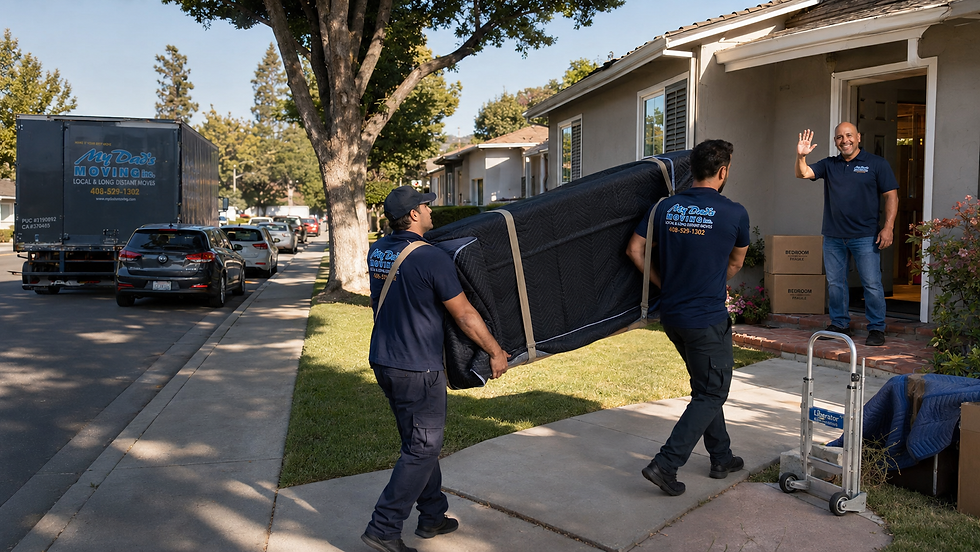
A long carry moving fee becomes a problem when the moving truck cannot park close to your door, loading dock, driveway, apartment entry, or office entrance. The issue is not only distance. It affects labor time, crew safety, property protection, pricing, and damage risk.
For Bay Area moves, this problem shows up fast. A truck might not fit on a narrow Morgan Hill driveway. San Jose curb parking might already be full. A Downtown San Jose apartment might require elevator scheduling and a long hallway route.
My Dad’s Moving Inc. helps residential and business customers plan Bay Area pickup, packing, loading, and nationwide delivery with access problems in mind from the start.
What Is a Long Carry Moving Fee?
A long carry fee is a charge tied to the distance movers must carry items between the truck and the entrance. It applies when the crew cannot park close enough to load or unload within the standard carry distance.
For California household goods moves, the California Bureau of Household Goods and Services explains long carry in its Maximum Rate Tariff 4. The tariff references the first 75 feet, then adds distance in 50-foot increments, or portions of those increments, when equipment cannot be placed within 75 feet of the entrance through no fault of the mover.
Local moves, interstate moves, apartment moves, office moves, and long-distance deliveries follow different estimate structures. The main point is simple. Distance from truck to door needs written discussion before the move starts.
How Far Will Movers Carry Items Before Charging Extra?
Many movers use a standard carry distance around 50 to 75 feet. The more important question is how the route is measured. It is not a straight line from truck to front door. It follows the real load path, including curbs, sidewalks, driveways, lobbies, freight elevators, gates, ramps, and stairs.
Why Moving Trucks Cannot Always Park Close to the Door
A moving truck needs more than curb space. It needs legal parking, safe clearance, stable ground, and a loading route the crew uses without blocking traffic or damaging property. In South County and San Jose, access problems often look different from national moving guides.
Morgan Hill, Gilroy, and San Martin moves often involve long driveways, gravel, gates, larger lots, tight turnarounds, and homes set back from the street. San Jose moves often involve curb congestion, red zones, apartment rules, HOA limits, narrow streets, construction, or limited loading zones.
In Willow Glen, older driveways create clearance problems. In Almaden Valley and Silver Creek, hillsides, gates, and steep drives often affect truck placement. In Downtown San Jose, the issue is usually timing, permits, elevators, and parking control.
What Happens If the Moving Truck Cannot Park Close to My Home?
The crew should inspect the route before heavy items move. They should identify truck position, load path, surface hazards, stairs, doorway turns, and any need for equipment or added labor.
The plan might include a long carry route, reserved parking, a shuttle truck, extra crew support, floor protection, or a revised loading sequence.
How San Jose Parking Changes the Plan
San Jose treats curb access as a formal issue in many areas. The City of San José explains its Tow-Away Permit process, which helps reserve curbside space for permitted work or loading needs. Legal curb access near the entrance might cut carry distance, reduce labor time, and make the move safer.
How Professional Movers Solve Long-Carry Problems
A skilled mover does not view long carry as walking farther. He views it as load path management. Every extra step adds handling time. Every turn adds risk. Every curb, hallway, stair, elevator, or wet surface changes the wrapping, staging, and moving plan.
The crew should set up the move before the house empties. This includes marking the safest path, protecting floors, staging furniture in order, confirming elevator use, checking gate access, and matching equipment to the surface.
My Dad’s Moving Inc. provides moving services for packing, loading, residential moves, business moves, and nationwide delivery, so carry planning also needs to account for how items will ride in the truck.
Inspect the Load Path First
The load path inspection should check distance, slope, stairs, curb height, surface type, doorway width, turns, hallway length, elevator size, and landing zones. A crew should also look for trip hazards, parked cars, gravel, slick concrete, and tight furniture angles.
Use the Right Equipment
Long carry work needs the right tools. Four-wheel dollies work best on clean, level surfaces. Appliance dollies give better vertical control on refrigerators, washers, dryers, and tall cabinets. Stair-climber equipment helps in some stair conditions, with trained handling and proper item prep.
Lift-gates help when weight, dock access, or truck height creates risk. Piano boards, straps, furniture pads, door jamb guards, floor runners, and shrink wrap reduce damage exposure. Heavy boxes belong low in a dolly stack. Tall, loose stacks waste time and increase tip risk.
Long Carry vs Shuttle Service vs Extra Crew Time
Long carry, shuttle service, and extra crew time are not the same thing. A long carry means the crew carries items farther from truck to entrance. Shuttle service means a smaller truck moves items between the home and a larger moving truck parked elsewhere. Extra crew time means more labor is needed.
The right solution depends on the access problem. A long driveway might need a controlled carry path. A tight hillside street might need a shuttle. An apartment tower might need extra crew staging. A commercial move might need building coordination and equipment sequencing.
Good planning protects both price and schedule. Poor planning turns every trip into a delay.
What Is Shuttle Service in a Long-Distance Move?
Shuttle service means a smaller truck transports items between the residence or business and the larger interstate truck. It is common when the main truck cannot safely reach the pickup or delivery point. This matters on long-distance moves because access must work at both ends.
When Extra Crew Support Makes More Sense
Extra crew support works when the truck location is acceptable but the route is slow. Examples include long apartment corridors, service elevators, multi-floor homes, office furniture routes, or heavier household items requiring spotters.
How Long Carries Affect Cost, Time, and Damage Risk
Long carry raises cost because labor time rises. Each sofa, dresser, desk, appliance, box stack, and mattress travels a longer path. Those minutes build into real time by the end of a full household move.
It also affects damage risk. Longer routes create more contact points. Items pass through more corners, curbs, thresholds, and surface changes. A dresser carried 25 feet across a flat driveway is not the same job as a dresser carried 160 feet through a lobby, elevator, hallway, and tight apartment turn.
Damage prevention starts with packing. Dish packs need double-wall construction, bottom cushioning, vertical plate placement, and weight layering. Book boxes should stay small because dense loads become unsafe fast. Wardrobe boxes, mirror cartons, mattress bags, lamp boxes, and TV cartons reduce handling failure during long carries.
Do Movers Charge Extra for Stairs, Elevators, or Long Walkways?
Yes, extra charges often apply for long walkways, stairs, elevators, shuttle service, or difficult access. The final answer depends on the mover, move type, estimate, distance, labor time, property conditions, and written agreement.
The better question is whether the mover identifies those issues before move day.
Why Valuation Coverage Matters
Interstate moves include valuation choices. FMCSA explains liability and protection options, including Full Value Protection and Released Value protection.
Long carry conditions increase item handling. More handling does not guarantee damage, but it raises the need for accurate inventory, proper packing, item condition notes, and clear valuation selection.
How to Avoid Long-Carry Surprises Before Moving Day
You reduce long-carry surprises by giving your mover clear access information before the estimate is finalized. Photos, measurements, and building rules save time.
Take photos of the curb, driveway, front door, stairs, elevator, hallway, gate, and best truck parking area. Measure the likely walking route. Ask your HOA or apartment manager about elevator windows, loading docks, insurance rules, move-in hours, and parking limits.
If you are comparing movers, read How to Choose the Right Moving Company in the South Bay Area before booking. Price matters, but access planning matters more when the property has parking limits, distance, stairs, or long-distance delivery needs.
Ask These Questions Before Hiring a Mover
Ask direct questions before signing. Does your estimate include long carry conditions? Where should the truck park? What happens if the crew cannot park there? Do you offer shuttle service? How do you handle stairs, elevators, and gated communities? What floor and door protection do you use?
Why Local Experience Matters
South County and San Jose moves require local judgment. A crew familiar with Morgan Hill, Gilroy, San Martin, Willow Glen, Almaden Valley, Silver Creek, and Downtown San Jose will understand common access problems early.
The story behind My Dad’s Moving Inc. matters here because moving is not only equipment and trucks. It is judgment, preparation, and trust.
What Should Be in the Paperwork for a Long Carry or Shuttle Move?
For a local or long-distance move, access issues should be written clearly. The paperwork should reflect estimate type, services requested, inventory, pickup access, delivery access, stairs, elevator requirements, shuttle needs, and valuation choice.
For interstate moves, FMCSA’s Your Rights and Responsibilities When You Move explains key consumer documents and responsibilities. The bill of lading is central because it acts as both a contract and receipt. If access charges or shuttle service are likely, vague verbal promises are not enough.
Inventory management also matters. Long carry and shuttle moves often involve more staging. Items might move from home to small truck, then small truck to large truck, then large truck to destination, then destination truck to entry. Labels, room tags, and condition notes protect both sides.
Should Long-Carry Charges Be Listed on the Bill of Lading?
For interstate moves, access-related charges and services should be clear in the paperwork. The bill of lading should not leave major cost issues open to guesswork. For local California moves, ask for written clarity before work starts.
When to Request a Quote

If your home, apartment, office, or delivery address has limited access, reach out to request a quote from My Dad’s Moving Inc. and describe the parking, stairs, driveway, elevator, hallway, or gate conditions up front.
A mover with the right information gives a better plan, cleaner estimate, and safer moving day.
Frequently Asked Questions
What is a long carry fee when moving?
A long carry fee applies when movers must carry items farther than the standard distance between the truck and the entrance. It often appears when parking, driveways, building rules, or street access keep the truck away from the door.
How far will movers carry items before charging extra?
Many movers use a standard carry range around 50 to 75 feet. California tariff language references the first 75 feet, then added distance in 50-foot increments or portions. Ask how your route will be measured.
What happens if movers cannot park near my house?
The crew should inspect the access route, choose a safe load path, protect floors and doors, and explain added labor, long carry, shuttle service, or parking options before heavy items move.
What is shuttle service in moving?
Shuttle service uses a smaller truck to move items between the property and a larger moving truck parked farther away. It is common when narrow streets, steep drives, gates, or city parking limits block main-truck access.
How do I avoid a long carry fee?
Reserve parking when possible, check city or building rules, measure the route, photograph the access path, confirm elevator windows, and tell your mover about stairs, gates, driveways, and parking limits early.


Comments